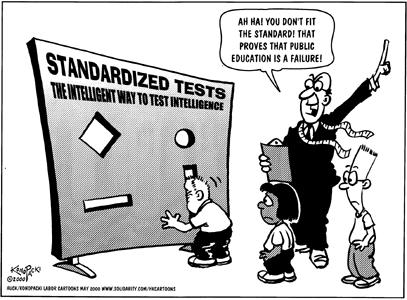
I have many beefs with standardized testing. In Utah we use a Criterion Reference Test (CRT) that must be taken by students in 3rd through 8th grade. In my opinion, one of the big flaws with this kind of test is that by having the same test for all students compares them against each other. The tests are graded on a curve with the bulk of the students falling into the "C"range. This makes it so your score on the test only shows how well you did compared to the other students. I'm sure there are many other reasons CRT-type tests are a poor measurement of learning, but this is one that comes to mind.
Luckily, thanks to computer assisted testing some fo the issues with standardized testing can be fixed. Adaptive testing seems to be a step in the right direction. Each student's test will change and adapt according to how well they are doing. If a students gets an answer correct then they move on to a harder question. If they get it incorrect then the next question is easier. Each student then gets a personal test based on what they know. To show true progress though, there would have to be a pre- and post-test. Here's a link to an article about Utah's possible change:
Utah Considers Adaptive Tests


I am thrilled that this change is being made (even though there will be issues). They are also doing more than just multiple choice questions (short answer, essay, matching in a drag and drop format, etc.). The grand hope is that these kinds of high-tech tests will be given more than just once in a year so that they can shape our instruction. What a novel thought.
ReplyDeleteSomething just occurred to me: It seems that recently the idea of merit pay keeps coming up in Utah politics. I think adaptive testing is great, but don't be surprised if it's a step towards merit pay. For example, let's say there are 3 levels of questions on the adaptive tests. Level 1 is the basic core standards that all students must show proficiency. Level 2 and 3 require higher level cognitive skills and/or more difficult material. So say you're a teacher who's students get mostly 1's. You get payed accordingly. If you're a teacher who students show proficiency at 2's and 3's you get paid more based on some sort of percentage of students who test at that level. Maybe, maybe not. Just a thought.
ReplyDelete